who’s the boss?

lemme ‘splain something to ya: You’re probably payin too much for your mobile phone.

In case you’re thinking: No shit sherlock . . . .

I don’t mean you’re paying too much for your phone. I mean, you’re giving “Apple Computer, Inc.” too much of your value no matter how much money you pay. Or would be, if they still had that name. They don’t have that name anymore, because they don’t need it, because they are renting space in your head for free.

I don’t have time for this bullshit, bc I’m DOing IT.

Daily writing prompt
Describe the most ambitious DIY project you’ve ever taken on.

love & politics & technology

Gentle Reader: this is one of those pieces where ya write the title first, and then ya see what comes out the fountain pen. Love, Politics, & Technology … I mean, shoot for the moon, land on the roof, amirite?

Love

What do I know about love? Less than any good 3-minute hit song on the topic, I assure you. I’m not being modest, it is what it is: I definitely can’t do better than a song about love that millions of people love.

But I know what I know about love, and I do think that I’ve learned something recently. I’ve had many decades of failure – generations, in fact – followed by solid success. I’ve learned something that may be helpful to other people, so now I feel like I’m obligated to write it down ….

Ok, now I’ve judo’d myself into feeling like this is a good thing, instead of being embarrassed about trying.

So here goes: for me, the key to love is that when I don’t have the love I need, my coping behavior is to think about it. I’m not saying I always come up with a solution – that is verifiably untrue! I’m saying that obsessive thinking is the brick that remains in my wall of cope, even today.

Over a very long and difficult period of struggle, I’ve eliminated the self-destructive copes I had, and they were a-plenty. Don’t get me wrong, I’m no California hippie, I’m not gonna tell you how to namaste and stuff, not gonna sell you yoni balls. If you know, you know. I just mean that if you have self-destructive copes, you know what I mean already. Nobody and nothing can help you get rid of the self-destructive copes but you, so I don’t know what to tell you about those. I truly wish you luck and hope you conquer your demons.

So for me, thinking is my cope – for reasons that aren’t relevant here. What matters is that people use a “cope” to avoid feelings. Now that I’ve gotten rid of my self-destructive copes: the bridges I burn can light my way, baby! Back in the day, I was setting fires just because. Now I burn the forest to see the trees.

That’s a metaphor, take it easy. I know, it’s not easy being green. Sorry, I love dad jokes 🙂

Anyway, when I don’t have the love I need, I can’t stop thinking about it. But thinking about it doesn’t mean I can do anything about it.

I’m just gonna think about it, and since my self-destructive copes are gone, all she has to be is the person who can accept the things about myself that I cannot change. The things I can’t change are just my own human failures, no biggie. They’re not that hard to accept without the self-destructive copes that used to come with the package.

And on my end, all I have to do is think about the things she cannot change, and understand that these are human parts of the human I love. Easy peasy.

Yeah, I know that’s what’s meant by the advice “Find the lock that fits your key.” I’m a fast thinker, but sometimes a slow learner.

Politics

I ran for California State Senate in 2022, in a district that spans a million people across the west side of Northern California. I loved doing it, and I lost by a lot. After the experience, I realized I could never be a political actor again.

I didn’t mind losing as much as I thought I would, but I vowed: never again. I puzzled about this for a long time, and only recently did I understand that it was all about love.

I love trying to fight for what’s right. I love meeting people and understanding their concerns, and then trying to fix their problems. I don’t love public speaking, but I really enjoy it as performance. I thought that I would love politics, and that I’d keep trying to win a seat through many elections, no matter how many losses I had to pile up first. I was expecting to lose, and thought that I’d try for decades if that’s what it took.

But when I lost, I quit forever, and I couldn’t figure out exactly why.

Now I know. The problem is, I love to share my thoughts for the very specific reason of developing a conversation. Politics, whatever else it is, is a job of directing the conversation. And to me, that’s actually a job of destroying the conversation.

I don’t love that. That’s the opposite of what I love. That’s why I had to quit politics forever. 

I talk with people so that I can think together with them, not to tell them what to think. To me, that’s giving them love, and that feels good. Politics feels very, very bad 😦

Technology

I’ve been working in technology for over 25 years now, so once in a while some bright young tech person asks an old guy like me to speak to some future thinkers who want to hear about what I think the past means for the future. I think I’m too old to understand the present, but I’m young enough to see the future.

Just recently, I thought I gave a really good short presentation about the future of technology. And then afterwards, I tried to record the presentation and realized that it sucked without the audience, no matter how well I delivered the performance or what I said in the recording.

No audience, no joy. 

And now I’ve realized that I’m going to quit giving recorded tech presentations.

Yeah, that’s weird, right? I mean it’s obvious that I couldn’t reproduce the joy without the audience, but why does that mean I’m never going to record tech discussions again? I love talking about technology with technologists in public, do I really want to lose that?

No audience, no joy. What exactly does that mean? In my particular case, it meant that most of the presentation was about getting the audience to like me, so that we could have a good conversation. The convo was great, the liking part was necessary for a lot of normal human reasons – but also substantively superfluous to the slide presentation.

There was only one slide of any substantive interest in that whole preso, and here it is:

I think that if you’re the kind of technologist who would enjoy a conversation with me, you already basically know what is meant by this slide.

In any case, if you like me already, for whatever other reason, including liking what you’ve read above or liking what you see in the slide, and you love thinking about technology – then feel free to reach out to me …

Just remember, as a technologist, that if we record the conversation, even if we simply write about it: we will lose information! This isn’t quantum physics, but it’s as sure as Schrödinger that a conversation has indeterminate meaning until it’s observed. Consequently, an observed conversation has a different meaning than an unobserved conversation. This cannot be solved by LLMs.

July 4, 1976

Scotch Plains, New Jersey, was the perfect American town. I’m sure that some of you feel that you grew up in the best small town in America, and if you’re lucky enough to feel that way, I’m not trying to tell you that you’re wrong. I’m just saying, I feel the same way.

Obviously, I’m reminiscing here rather than convincing. But especially when I think about growing up, I talk and often think like a guy from Jersey, so maybe some of this will sound like an argument. Or maybe I can say, Cali-style where I live now, that I’m just stating my personal inner truth: The 1970s were the perfect time to grow up in America, because it was then that you had the best chance of realizing the American dream.

A hundred years after the Emancipation Proclamation, just past the transformative Civil Rights Era, heading into decades of American peace and domination. If you were an American child in the Seventies, came of age in the Eighties, started your career in the Nineties, boomed with the internet in the Aughts – you at least had a chance of a rising tide lifting your boat, if you were lucky enough to be born in the right place at the right time. I don’t care what kind of crappy boat we’re talking about here: Even your little dinghy, rusty and full of holes, tattered sail and busted motor and all, even that sad water jalopy could take you somewhere worth the time at sea.

Just 25 miles from New York City, Scotch Plains was a perfect suburban repository of the immigration influx of the late 19th Century that came through Ellis Island. The first couple of generations clawed out a new life on the Lower East Side of Manhattan. By the third generation, people who cared more about assimilating went to Long Island or, as a reach, to Connecticut. But if you embraced your ethnic roots, you went to New Jersey. So to me, Scotch Plains, NJ was the perfect melting pot, a stew of Irish Catholics, Italians, Jews and Poles, Blacks and Puerto Ricans, and a few Orientals. (The term “Asian American” wasn’t a thing back then.) Everyone could be proud of who we were, but everyone still had to figure out how to live together despite how different we were.

No one in my town knew what Korea was, not really, including me. But by six years old, I could not avoid an education on what America was, or wanted to be. All of us in town that age learned our first five-syllable word: Bicentennial. In July, it would be the 200th anniversary of the Declaration of Independence. I remember how hot it was that summer, but at least it was sandwiched between the two oil crises of that decade, and we could afford to run air conditioning in our split level ranch through the worst of the sweltering summer.

The red, white, and blue was everywhere leading up to that July. Bunting draped all over the downtown main streets, flags flapping from every other house, men with lapel pins and women with ribbons of old glory. A six year old can’t distinguish between genuine pride and community conformity, but the unavoidable displays of patriotism worked on my malleable little mind. I didn’t have to wonder whether America was exceptional, I knew it must be true because everyone in town was telling me so.

And I said it to my father, while taking refuge one brutally humid afternoon of the summer of 1976, sitting in my parents bedroom, the window air conditioner barely able to keep up with the modest demands of the little room. I sat on the bed while my father puttered around the dressing table, and I asked him: Isn’t it great? Isn’t it great that we live here, in the strongest, proudest, best country in the history of all the world? Isn’t it amazing what we’ve achieved in 200 years?

He said:

Well, it’s a good start, maybe.

I couldn’t believe my ears. What did this fresh of the boat Korean know about the Great United States of America?

He answered as best as he could. I’m not gonna pretend that I remember his explanation word for word; he spoke for a long time that afternoon. He spoke in broken English and never used memorable words. But I remember everything. Because he communicated all of his meaning and his intent through his broken language, through his pauses, elisions and silences, and through his face and his body. I remember exactly what he communicated to me, not word for word, but in his full meaning, in his intent, and in his insistence on the lesson:

Yeah, it’s a good start. The people you now call “Korean” have a four thousand year history. And that recently included two consecutive 500-year dynasties. It’s always the same pattern: around half a century of figuring out how the nation works, a century or so of rising to the good times, maybe a century of actual great times, and then a troubled period of decades where the infighting allows the outside in to destroy your nation. But it’s a long slow decline, could be another century or two. The first of those 500-year Korean dynasties ended in dominance by the Mongols, the second in dominance by Japan. In both cases, the same pattern.

Roughly: 50 years of construction, 100 years of rise, 100 years of good times, 50 years of infighting, and then 200 years to the end. In each period, give or take a few decades.

I thought the old man was batty. In the 1970’s in Scotch Plains, New Jersey, nobody knew anything about Korea, not really, not like my father did. But he didn’t have a clue about America. Surely this fresh off the boat Korean knew nothing about the future of my birthland, the United States of America.

Well …

That was coming on fifty years ago, I’m over a decade older now than my father was that summer afternoon, I’ve lived a whole lotta life and I’ve seen some things. I’ve even absorbed a little history, something I shoulda soaked up more from the pride of my paisanos back in Jersey: Rome had a 500 year Republic followed by a 500 year Empire. And both followed the pattern. If you know only last century’s history, the phrase “a thousand year dynasty” might sound a little chilling to you. But that was only recent history. In the really long run, perhaps it’s not so terrible to imagine two consecutive 500 year dynasties. There is a thousand years of glory in such a history even existing, no matter the ups and downs.

The 250th anniversary of July 4, 1976 is within our sight, as is the current state of our nation, laid bare for anyone to interpret. I leave the details of math and pattern matching as an exercise for the reader and for X. Just a closing thought: I think people these days worry a lot about American decline. But nobody gets good times forever. You can have good times and bad times and still last a long time; rise and fall and recovery and try again. It’s not easy. It doesn’t happen a lot of times in history. But it does happen, in the exceptional cases.

corporate valar

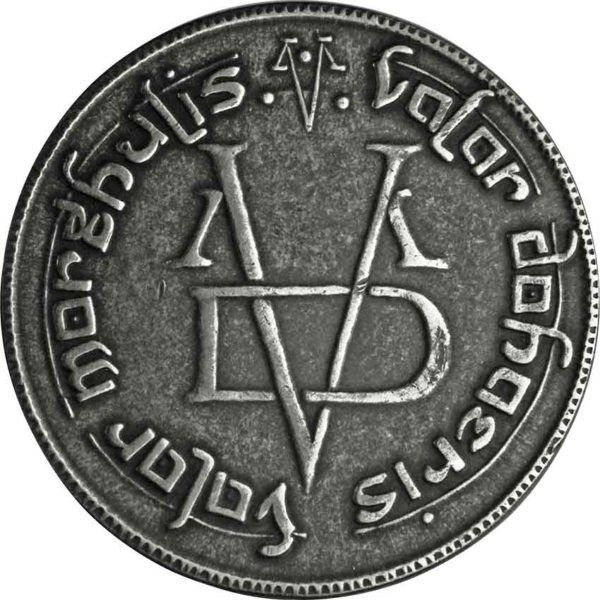
“Valar Morghulis” means “All Men Must Die” in High Valerian. Valerian is not a real language, it’s from the fictional world of Game of Thrones – but perhaps the phrase is now better known than its original Latin counterpart, “Memento Mori.” Remember Death – the sentiment is the same: we are all mortal, and reflecting on this truth helps us live better in our short time of existence.

The death of Susan Wojcicki stands as yet another reminder of this eternal truth, as if we needed another. She is the fifth close working colleague of mine to die during my career, though I cannot claim to have been truly close to her. I was perhaps the shortest tenured member of her various teams, having lasted only six months before she decided, quite correctly, that I was not a good fit for her as a direct report. I was never a good fit for Google, despite lasting there for five years, and it was a kindness for her to allow me to simply keep the same responsibilities with another boss.

So this post is not about Susan, because the many who knew her better are already posting in great volume about her kindness, her humanity, her towering achievements. My passing familiarity with her is really meaningless in comparison.

Instead, here I would like to reflect on how “Valar Morghulis” might inform the life of a company. Perhaps this seems absurd, or even inhuman, as corporations aren’t people, regardless of some bizarre legal interpretations of corporate personhood. But it’s undeniable that great corporations affect a great many human lives, and sometimes do so for longer than the lifespan of any one human life. And yet, just as with every human, all corporations must die.

I’ll indulge in just one vignette from my time working with Susan. This was early in my time at Google, after I’d spent a dozen years in the startup trenches – I’d never intended to end up at such a large company, over 40,000 employees at the time. I was insufferably snotty about the joys of working in startups, and what I saw as the relative torpor of the burgeoning tech giant I found myself within.

As I sat next to Susan at lunch, I mouthed off about the joyful urgency of startups, the adrenaline of work fueled by the ever-present fear of death. I told her that Google had lost that urgency, so its best days were behind it. 

Susan replied, “No. I still fear it. I still fear for our existence, for our future, just as I did in the earliest days.” And as I looked in her eyes, I knew she meant it. Because what I saw there wasn’t just a manager managing an impudent new employee. What I saw and felt from her truly was fear, honest and palpable as any that I knew in my startup days.

She wasn’t wrong. At that very moment, Google was grappling with the consumer transition from desktop to mobile, and Susan was responsible for the Ads business, the lifeblood of the company. The vast majority of our revenue came from desktop search results, and our early attempts at mobile monetization looked as if they would be swamped by a sea change in the industry, led by Apple. Another year or two of this kind of trend, and mighty Google would take its place in the graveyard of forgotten tech companies.

All companies must die. But that was merely a brush with mortality for Google, which in the following two years changed the landscape with Android, and successfully climbed the mountain of work required to make our mobile monetization just as powerful as desktop. Susan’s fear came at a time when Google’s revenue stood at around $50B. Today the company is close to $250B. All companies must die, but not Google, not then.

Of course, “Remember Death” is not a rallying cry to preserve a corporate growth rate. It is certainly not a call to establish success and glory on this earthly plane – it’s the opposite, it’s a reminder that all our earthly accomplishments will one day fade to dust. Google will one day stand in the hall of forgotten heroes, along with Kodak, DEC, Xerox, and countless others. So in the time between that day and this, what should “Valar Morghulis” mean to all those who lead companies great and small?

Perhaps we can find inspiration in the other inscription of that Faceless coin, “Valar Dohaeris.” All Men Must Serve. In the stories, this phrase is said most urgently by those who serve the God of Death, so they interpret their service as assassination, helping others to meet their god. I like the phrase, but not that interpretation, especially not for companies. We have plenty of companies serving the God of Death, and perhaps some of them are necessary, but this cannot be the most common interpretation if we are to continue as a species.

I’m not here to recommend a particular interpretation, but just to suggest that company leaders should remember both sides of the coin. All Companies Must Die. All Companies Must Serve. 

I dislike the legal interpretation of corporations as “persons” due the same rights of human people. But as companies are composed of people, and affect human lives with the power of all of those people working together, the world would be well served by company leaders remembering both sides of the coin.

In the stories, Arya Stark recited the names for her vengeance every night before she slept. Polliver. Ilyn Payne. Joffrey. Cersei Lannister. The Hound. Some of these died by her own hand, some of these were killed by others, and at least one became a sort of friend. I’ll adopt and adapt the practice, remembering those who I worked with, each of whom left a great mark on me with their lives, their work, and their deaths.

Craig Johnson. Joe Miller. Dan Fredinberg. Bijan Dhanani. Susan Wojcicki. May they all Rest In Peace.

Corporate Morghulis.

Corporate Dohaeris.

bill & ted’s unconscious competence

There’s a difference between having a plan and changing it, and never having one at all.

6th Uncle

I was twenty-one years old when my uncle said that to me in Minnesota, and I’m still thinking about it now, more than three decades later. When he laid these supposed pearls of wisdom on me, I’d been driving aimlessly around the country right after graduating from college. Understandably, my father must have been concerned about whether I knew what I was doing, so I knew I’d have to hear a whole lot of something even before the visit with my uncle, who happened to be traveling through Minneapolis on business while I was there to visit a friend and pay homage to Dylan. 

I enjoyed that wandering burst of my youth, but the only thing that I’ve been turning over in my head ever since is what the heck my uncle was really trying to say. For the purposes of this brief post, I’m going to skip three decades of contemplation, and just write down what I hope it means:

Early in my career, I heard about the four levels of competence – listed here from worst (1) to best (4):

  1. Unconscious Incompetence
  2. Conscious Incompetence
  3. Conscious Competence
  4. Unconscious Competence

I’m not going to describe these levels here, there’s plenty of material elsewhere that explains these levels better than I could. To me, when I heard about those levels, and for a long time afterwards, I simply could not believe in that fourth level. I thought it was just something that old people pretended to exist, because they couldn’t remember how things worked. How is it possible to be unconsciously competent? 

Now, however, I simply know that this level exists, because I understand the simplicity of the insight: if one has consciously ingrained competent practices and corresponding ethical behavior into one’s habits, the result will be as competent as both those practices and adherence to those ethics. You’ll be pleased with your competence, and no one else’s opinion really matters as much. That’s you plural: your teammates all need to be on the same page regarding your practices and ethics too, or the result will eventually become extremely unpleasant unless you just happen to be lucky enough to never need the awesome power that comes from Unconscious Competence.

I mean, there’s probably a better way to say all that, but I’m trying to be precise about it, rather than saying it more briefly. It took me too long to understand that this is what is meant by “Unconscious Competence,” and it would take too long for me to try to say this all more clearly.

But … I think we could come at this from another angle …

This kind of navel-gazing was invented, for the Western world, by our old friends So-crates and Plato.

Socrates is perhaps the most famous name in Western philosophy, and famously never bothered to set pen to paper when it came to his philosophy – he wasn’t illiterate, he simply believed that deep human meaning could not be transcribed. The only way to transmit any truly valuable human meaning was directly from one human being to another, without anything in between to mix the message, without any mediation. And that includes: without any mass media, not even our first mass media, writing.

Plato, on the other hand, was a helluva writer and a smart guy with his own thoughts to add to those of his most famous colleague. And there you have it: two of the biggest names in Western philosophy, fundamentally divided by an extremely important and current philosophical question about whether human meaning can be conveyed through mass media without losing everything important about being human.

I never really had a dog in that fight, but these days I’m leaning towards So-crates, insofar as how I’d ideally live my life. Sure I’m writing on this here personal mass media blog, but I’ve thought for years and years that writing’s not for me, other than as a tool to think. Now we can all see that truthful writing has lost so much of its power in today’s mass media, and Socrates had a great point about the importance of communicating truth from human to human.

Because of the internet and all it hath wrought? Well, yes – but don’t get me wrong, I still think technology can turn around its recent trend, and begin to work for humans again. I know it’s a good thing that Plato decided to write.

But in my personal musings, I’m with So-crates just because Unconscious Competence is something I’ve observed from time to time in others, if not often enough in myself. (I mean, sure I’d like to see it more in myself and others, but that seems unreasonable given that there are, after all, four levels.) And when I see it, when I see someone succeed just because of consciously designed practices and corresponding ethical behavior that become habits – it’s really funny to watch what happens next: Those people get asked, “How did you become such a success?”

And really, the person just can’t give an answer that seems to make sense to a lot of people, because the truth is that a whole lot of what they did was just Unconscious Competence, and there’s no good way to explain that. They just live it, and someone else writes it down if they happened to notice – but that someone else always adds their own humanity, and that’s a good thing too. Maybe we can all be Socrates and Plato; certainly neither could have become who they were without the other.

Be Excellent.

truly universal advice

I enjoy mentoring as a stress-relieving hobby. I don’t mind stress, I consider it a byproduct of pursuing my goals, and I’m still willing to suffer if required to achieve my goals. I’ll probably need to let go of that at some point. But I’m still trying to do my best, at my advanced age, to do something new & interesting in the startup world, for however long I can still have fun doing it. So I experience a normal amount of stress, and it’s fine because I have more than one way to relieve it – but my favorite way to relieve that stress is in mentoring. 

It helps me to try to give people advice, because it reminds me to continually relearn the same lessons I still need today, to keep doing the very same things that people want advice about. The process of giving advice is never one way: I always learn and relearn lessons in the conversation from the other person.

Startups are great because every one is a new experience no matter how much experience you have. I can help someone else just by reminiscing about what I’ve already done, and at the same time, help myself to charge up those very same hills that I see in their experiences. It doesn’t matter how many times I’ve done it, we’re still both at the bottom of the hill today.

I’m always worried though, that anyone might remember the words that I’m saying, rather than the fact of what we did together during the mentoring. See, the value of the mentoring isn’t in any words that were said. Instead, the value was created because two human beings tried to learn meaningful lessons from each other based on their own direct experiences in life. There is no small set of words that will capture all of the things of value that truly occurred in this human interaction. I might even go so far as to argue that trying to remember any small set of words puts you at risk at forgetting the whole value of the interaction. Human interaction is irreducibly complex, and incommensurately valuable.

Now, you probably think I’m making a point about artificial intelligence. And sure, but I think that point is obvious, so I’m not going to say it.

Instead the point I’m trying to make here is about advice. There are almost no words of advice that are brief enough to easily remember, while also being universally applicable. These are my favorite:

There’s more than one way to say these words. My friend and I were discussing this video while on vacation, and he made this T-shirt about it.

As far as I know, this advice is truly universal to all people, and is applicable in all situations that might cause worry. Of course, the key is in applying the central question: “Can you do anything about it?

For example, unless there is something more directly useful to talk about in my mentoring sessions, I often just walk through that question:

CAN

What is possible in the world that you see?

YOU

Who are you? What are you capable of? What do you want?

DO

What would be the best outcome? What is the best way for you to serve that outcome?

ANYTHING

What exactly are you going to do, and when are you going to do it?

ABOUT IT?

Oops remind me: Exactly what is the problem we are trying to address here?

And don’t worry, because there’s nothing to worry about now.

Yeah so anyway, I bought a couple hundred of those T-shirts. If you see me in person and want one, just let me know your size and you can have it if there are any left. I think it’s truly universal advice, and I like to be helpful – I’m fairly certain that if you wear this shirt, someone will benefit from it.

don’t be evil

B42

“Don’t Be Evil.” 

If you recognize this as Google’s former corporate motto, you probably regard it as a broken promise. But arriving too quickly at this judgment misses the lesson of the journey. It may be true that we now live in a tech dystopia created at least in part by those who once proclaimed, “Don’t Be Evil.” But in the beginning, that motto contained a magnetic True North that once meant something, that still means something, something that is awaiting our rediscovery. 

So before memorializing “Don’t Be Evil” as a broken promise, we must remember what it once meant.

We have to remember the time before the first widespread criticism of this mantra, before the semantic noodlers complained that it is impossible to define what “evil” means. See, the thing is, before this criticism was widely shared, it wasn’t relevant. It wasn’t relevant because the real audience for “Don’t Be Evil” already knew what the phrase was supposed to mean.

The real audience was undoubtedly the employees of Google at the turn of the millennium, when either Buchheit or Patel (depending on the storyteller) first proposed this as the company’s motto. Google had fewer than 250 employees at the time. “Don’t Be Evil” was a phrase that was easily understood by not only those 250 employees, but also by all of the company’s potential employee base. Yep, I’m claiming that every person who had the qualifications to be hireable by Google at that time (1999-2001) would easily understand the basic meaning of Don’t Be Evil.

See, if you knew enough about computing in those days to be employable at Google, then you grew up in technology watching IBM lose to Microsoft, then watching Microsoft crush Apple, and then watching the government strangle Microsoft. And then you got to enjoy watching Google beat the crap out of Microsoft. It’s just human nature to watch all this and make it into a morality play, with extremely domain-specific notions of “good” and “evil.”

When the government hampered Microsoft in the ’90s, that was a fair comeuppance for an abusive player, just as had happened to IBM in the ’80s when Microsoft was coming up. Small new companies innovate into the spaces left by the decrepitude of large old companies. The cycle of life applies to all of us, businesses too. In business, as in life, that cycle plays out in predictable patterns. And as humans, we love telling ourselves a story about our patterns. And to be compelling, our stories must have good guys and bad guys, good and evil. “Don’t Be Evil” is a morality play, and it is just a fiction, but still, these notions of good and evil move us – especially when we’re deciding where to work and how to win competitive battles.

So IBM vs Microsoft, Microsoft vs Apple, Microsoft vs Google – that was the drama that played out in information technology at the time, and our notions of “good” and “evil” were aligned with the prevailing morality play that everyone knew as orthodoxy, even if they disagreed with it: Microsoft was the bad guy, Apple was awesome and cool before MSFT used monopolistic advantages to crush them (this was before the Second Coming of Jobs). Microsoft was Evil. Google was Good.

So in this morality play, “evil” means, basically: using “business techniques” instead of superior technology to win. Don’t Be Evil simply means: win with technology, not with business techniques. 

“Business techniques” include perfectly legitimate and absolutely necessary decisions and deals around pricing, packaging, and distribution. But that’s just the bare minimum. The expanded world of business techniques gets pretty gray pretty fast, and eventually you end up where we are today: dark patterns that manipulate users, platform rent-seeking, externalization of business costs into the community, lobbying and other political manipulation. I don’t really like calling these things “evil,” but it’s fair to say that these are the tactics and methods of mature businesses, and they are not what successful startups do.

I worry that the tech world has been so dominated by the usual BigTech suspects for so long now that entrepreneurs have forgotten the difference between Good and Evil. But no matter: the world doesn’t need to remember because the truth will out: for the first time in a long time, nearly all the BigTech companies are grappling with disruptive technologies that they do not understand. When there is this much disruption in the air, fancy business techniques become less valuable, and a True North for product development becomes far more valuable. For the first time in a long time, opportunity is everywhere, all incumbents are vulnerable, and all startups have this one incontestable upper hand: Don’t Be Evil is a winning strategy, not an empty corporate motto.

a lever and a place to stand

“Give me a lever and a place to stand, and I will move the world.”

Archimedes (apocryphal)

When I was a kid growing up in New Jersey, all I ever wanted was to get out, across the river to the bright lights big city. I assumed that New Yawk City was the place that moves the world, because what else would a Jersey kid think amirite? And I loved everything about living there: I loved the hard work and the harder play, the high stakes and the almost tangible power and raw human energy that buzzed through the canyons between the skyscrapers. But after starting my career in “high” finance, I was disappointed in the financial engineering that passed as “creation” in that industry, and by 1999 it was obvious that the future was really being created across the country, in Silicon Valley.

So I headed West, searching for an industry that builds levers to move the world, searching for my place to stand. About a decade in, people began to tell me that my career path looked a little weird. From leveraged buyout lawyer in NYC to startup counsel in Silicon Valley to Korean venture capitalist to Fortune 100 corporate deal maker. And then it just kept getting weirder: international marketing, developer relations, enterprise product development, startup founder, BigTech product manager, startup sales manager and more. Not content with the variety of roles, I also wandered across sectors and products: enterprise hardware, metaverse consumer software, adtech, content moderation systems, maps, devops SaaS ….

Oh, and then I got sick of tech and ran for political office … now that was a weird move. But not to me, still just trying to understand what, if anything, moves the world in a better direction. Campaigning was a deeply moving experience for me, as I’m sure it is for any child of immigrants. I learned a lot, but the long and the short of it here is just that the political industry isn’t a place I can stand.

When I look back on it all, I feel lucky to have started my career in tech during that first decade from 1999-2008, before the global financial crisis, before BigTech was a thing … and maybe the last time we could have avoided the consequences we’re living out today. The dreams were big, the schemes were fun, and the common ambition was to put a dent in the universe with technology so good it seems like magic. The “why” behind this sparkling ambition was often unspoken, but I never thought it was about the money. Most of my friends in tech thought it was wonderful to see explosions of wealth of course, but we weren’t in technology to play the lottery, we were in it because we loved technology. 

We were mostly dorky kids who were lucky enough to have access to an Apple ][ or Commodore 64 in middle school or high school, we played Atari and Intellivision, we wrote our first programs in BASIC and we fell in love with the future. And though we might have loved technology for different reasons, I think the common thread was that we loved what technology could do for humanity. We loved the spirit of innovation for its delight, not the dollars. We loved the fun that tech could add to our lives.

So the place where I stood in the best years of my first decade in tech was in San Francisco, at a company called Linden Lab, and we tried to move the world with Second Life. Enough has been written about Second Life, I don’t like to add to the noise. But I can’t say enough about the company we “Lindens” called “the Lab,” especially now that people are recognizing Second Life as an OG when they talk about “the metaverse” today … 

Of course the product innovation was fascinating, but even more than that, I appreciate the workplace innovations we implemented at the Lab. Many of these are lost already in the sands of time, and frankly not all of our innovations were good ideas, but we had an authentic commitment to transparency, openness, and trying new ways to enable emergent bottoms-up innovation rather than top-down command-and-control management. We had open floor offices because it flattened hierarchy, not to save costs on real estate. We had snacks and games because we genuinely liked to have fun with each other, not as a nefarious scheme to keep overgrown adolescents at work. We had peer bonuses as a bonding experience, not as a competition for brownie points in the next performance review. We experimented in democratic decisionmaking, as messy as any experiment in democracy. We had remote offices, work from home, chat and video collaboration before any of these things were regarded as rational costs for a startup.

The Lab was also fearless with new business models, defining and implementing product lines in a way that felt like feeling around in the dark back then, but now seem prescient. “Freemium” as an acquisition strategy, the power of subscription metrics, data-driven decisions, SaaS-like pricing and practices before SaaS was a thing, defining product management roles before the internet industry had standardized skills for the role. We didn’t invent any of these by ourselves, but they were all relatively new business practices in our context.

So we endlessly experimented and adopted internal management and business practices on the fly while also attempting a product so ridiculously difficult that the largest technology companies in the world continue to fail today in their modern attempts to replicate the possibilities we demonstrated fifteen years ago. Maybe the only way we were old-school was that we built a profitable business, even though many companies had already amply demonstrated that tech investors prefer a fanciful growth story to the reality of profitable results.

[I’m leaving out the best part about the Lab: I could write a book about the people, but to even begin that here would be to raise uncontrollable emotions that are not at all the point here. Suffice to say that to this day I feel a bond with every Linden, past and present.]

What I realize now was that rather than being ahead of its time, the Lab was at the end of an era, before technology became Big Tech. The people that first populated Silicon Valley with technology workers were geeky idealists. Many of them, especially those who entered the scene from San Francisco, descended from a local cultural heritage of hackers and pranksters, the kind of Merry Pranksters that gave rise to the Cacophony Club and Burning Man – a culture of anti-authoritarianism, a community of individualists, a spirit of creativity and freedom and fun.

After the global financial crisis, for a variety of reasons, that culture gave way to people who … well, let me not judge any person, because we all live in glass houses, but looking at where we are today … the legacy of my last decade or so in technology is not about any of that spirit from my first decade. Too many technologists began to insist that technology could lead humanity, going so far as to believe in the inevitability of technological progress as if it were some natural force more powerful than the needs of humanity. And so we got surveillance capitalism, walled gardens, dark patterns, monopolistic rent-seeking, more and more exploitative and community-destroying business models and practices, and ever bigger and bolder next-gen Ponzi plays. None of those are technology; they are instead the social and economic results of favoring technology over humanity.

I’m an old man now, perhaps just yelling at the clouds. Sure, sure, I understand that some kind souls will object that I’m not that old, that there’s plenty of life ahead, plenty to do, plenty to dream. But see, I don’t think there’s anything to object to, I don’t think there’s anything wrong with being old. There are a lot of things that I see and understand now that I simply could not have understood with less experience in life. That experience – not just the technology and business experience, but ALL of the experience of living – is the lever that I’ve sought all my life.

And now I’d like to share the leverage of experience with as many people as I can who might use it to move the world in the right direction.

And the place to stand? Well, it has to be San Francisco. There are places in the world that I love more, but there is no other place that I know with that particular spirit of love for humanity over technology. That spirit has been dominated of late, it has been beaten, it has been bruised … but it is not gone – I just know it because I have been around long enough to know it. San Francisco is currently in the worst shape that I’ve seen in my quarter-century in California, so bad that it almost reminds me of New York City in the ’70s and ’80s … a place that we Jersey kids regarded as a bankrupt disaster, only later to realize that we should have spent way more time trying to get into CBGB. What I’m saying here is that we’ll later remember now as the time when San Francisco was authentically cool.

So – this is all my way of saying that I’m going to be spending my time in San Francisco working on technology startups in generative AI, virtual currencies, and metaverse technologies. I have the idealism of my first decade in tech, the experience of my second decade, and the determination to put humanity over technology. Most importantly, I have a few like-minded friends figuring out how to work together, and we have room for more.

If you are looking for a lever and a place to stand, let’s talk 🙂 A ping on LinkedIn is best if you don’t already have other contact info.

nifty fifty

When I turned 40 years old, I wrote a short series of four posts to try to sum up the four most important lessons I’d learned to that point. For most of the past decade, I thought I’d do the same at 50. I certainly have learned a lot – far more than I expected – and I assumed that I’d have no problem churning out the “five-for-fifty” posts to sum up my life’s lessons. I even imagined myself getting to 6-for-60 and 7-for-70, as I feel confident that the older you get, the more you have to say about life.

But all those lessons started to feel overwhelming (to read, not to write), so I recently began to think that I should concentrate on the one most important lesson. And that would be about the one most important topic, which is of course love.

Someday I’ll write about that, but this isn’t the day for it, this isn’t the time for it. This is 2020, and a half-century in, I can finally see that despite anyone’s fondest dreams, the cynics and the bruised romantics were always right: Love is not enough.

My home is on fire. We are like bacteria in a bottle, blindly exhausting all the available resources in our ecosystem. More and more people believe that the end is nigh. And that’s just the obvious future. In the terrible present, we are battered black and blue by our failure to bring about a just society. Amoral tech leaders fail over and over again to actually build socially beneficial products that are worthy of their position of power. The ruin of the fourth estate has led to idiocracy. What is the lesson that I should try to deliver when my half-century on the planet has me wondering if any eventual grandchild of mine could reasonably hope to see the same age?

The lesson is this: You can be at peace while still fighting.

I am stunned to discover that I’m at peace in a way that I never believed was possible for me, or for anyone. I am not confused about my place in the world. I’m not angry all the time; no grievances torture my heart. I know what I want to make of the remaining time that I have. I know how to give and receive love, I know the power of kindness.

It remains true that I react in anger with some frequency. I’m not as kind as I’d like to be. I do still have a low opinion of people who I believe to have wronged me, and I’m quite sure that there are people with a similarly low opinion of me – and I agree with that assessment at times. I don’t know exactly whether or how I will accomplish the things I dream of today.

But still, I find that my dreams are bigger than they’ve ever been. I know that I’m going to have to fight for what I believe in, and I love that because I’ll never stop fighting.

Your mileage may vary, but the road is there if you want to take it. True peace in your heart is available for anyone. But the fight for a world worth living in will always be everyone’s to fight. I worried that peace and serenity in my heart would mean less fire in my belly, but now I realize that the fire doesn’t come from me.