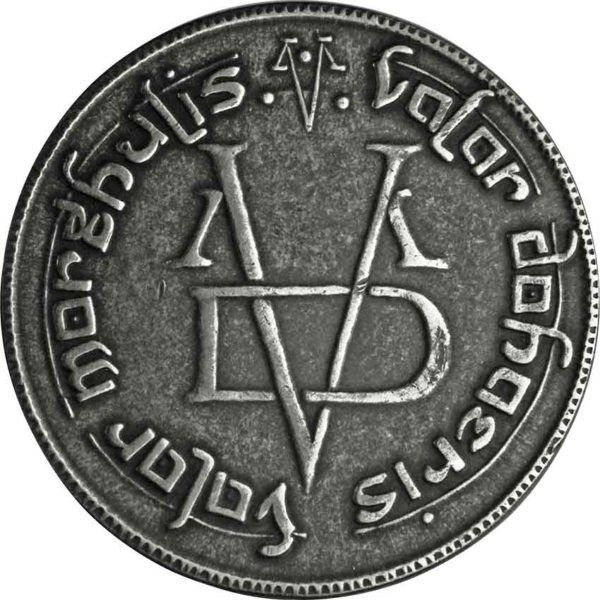
“Valar Morghulis” means “All Men Must Die” in High Valerian. Valerian is not a real language, it’s from the fictional world of Game of Thrones – but perhaps the phrase is now better known than its original Latin counterpart, “Memento Mori.” Remember Death – the sentiment is the same: we are all mortal, and reflecting on this truth helps us live better in our short time of existence.
The death of Susan Wojcicki stands as yet another reminder of this eternal truth, as if we needed another. She is the fifth close working colleague of mine to die during my career, though I cannot claim to have been truly close to her. I was perhaps the shortest tenured member of her various teams, having lasted only six months before she decided, quite correctly, that I was not a good fit for her as a direct report. I was never a good fit for Google, despite lasting there for five years, and it was a kindness for her to allow me to simply keep the same responsibilities with another boss.
So this post is not about Susan, because the many who knew her better are already posting in great volume about her kindness, her humanity, her towering achievements. My passing familiarity with her is really meaningless in comparison.
Instead, here I would like to reflect on how “Valar Morghulis” might inform the life of a company. Perhaps this seems absurd, or even inhuman, as corporations aren’t people, regardless of some bizarre legal interpretations of corporate personhood. But it’s undeniable that great corporations affect a great many human lives, and sometimes do so for longer than the lifespan of any one human life. And yet, just as with every human, all corporations must die.
I’ll indulge in just one vignette from my time working with Susan. This was early in my time at Google, after I’d spent a dozen years in the startup trenches – I’d never intended to end up at such a large company, over 40,000 employees at the time. I was insufferably snotty about the joys of working in startups, and what I saw as the relative torpor of the burgeoning tech giant I found myself within.
As I sat next to Susan at lunch, I mouthed off about the joyful urgency of startups, the adrenaline of work fueled by the ever-present fear of death. I told her that Google had lost that urgency, so its best days were behind it.
Susan replied, “No. I still fear it. I still fear for our existence, for our future, just as I did in the earliest days.” And as I looked in her eyes, I knew she meant it. Because what I saw there wasn’t just a manager managing an impudent new employee. What I saw and felt from her truly was fear, honest and palpable as any that I knew in my startup days.
She wasn’t wrong. At that very moment, Google was grappling with the consumer transition from desktop to mobile, and Susan was responsible for the Ads business, the lifeblood of the company. The vast majority of our revenue came from desktop search results, and our early attempts at mobile monetization looked as if they would be swamped by a sea change in the industry, led by Apple. Another year or two of this kind of trend, and mighty Google would take its place in the graveyard of forgotten tech companies.
All companies must die. But that was merely a brush with mortality for Google, which in the following two years changed the landscape with Android, and successfully climbed the mountain of work required to make our mobile monetization just as powerful as desktop. Susan’s fear came at a time when Google’s revenue stood at around $50B. Today the company is close to $250B. All companies must die, but not Google, not then.
Of course, “Remember Death” is not a rallying cry to preserve a corporate growth rate. It is certainly not a call to establish success and glory on this earthly plane – it’s the opposite, it’s a reminder that all our earthly accomplishments will one day fade to dust. Google will one day stand in the hall of forgotten heroes, along with Kodak, DEC, Xerox, and countless others. So in the time between that day and this, what should “Valar Morghulis” mean to all those who lead companies great and small?
Perhaps we can find inspiration in the other inscription of that Faceless coin, “Valar Dohaeris.” All Men Must Serve. In the stories, this phrase is said most urgently by those who serve the God of Death, so they interpret their service as assassination, helping others to meet their god. I like the phrase, but not that interpretation, especially not for companies. We have plenty of companies serving the God of Death, and perhaps some of them are necessary, but this cannot be the most common interpretation if we are to continue as a species.
I’m not here to recommend a particular interpretation, but just to suggest that company leaders should remember both sides of the coin. All Companies Must Die. All Companies Must Serve.
I dislike the legal interpretation of corporations as “persons” due the same rights of human people. But as companies are composed of people, and affect human lives with the power of all of those people working together, the world would be well served by company leaders remembering both sides of the coin.
In the stories, Arya Stark recited the names for her vengeance every night before she slept. Polliver. Ilyn Payne. Joffrey. Cersei Lannister. The Hound. Some of these died by her own hand, some of these were killed by others, and at least one became a sort of friend. I’ll adopt and adapt the practice, remembering those who I worked with, each of whom left a great mark on me with their lives, their work, and their deaths.
Craig Johnson. Joe Miller. Dan Fredinberg. Bijan Dhanani. Susan Wojcicki. May they all Rest In Peace.
Corporate Morghulis.
Corporate Dohaeris.
 ginsudo