I am not a close relative of Yoon Suk Yeol, the thirteenth president of the Republic of Korea. But we are in the same clan, the Papyeong Yoons. So of course I noticed that he received a life sentence last week for his failed coup d’état of December 2024, even though as an American, I’m not intimately familiar with Korean politics.
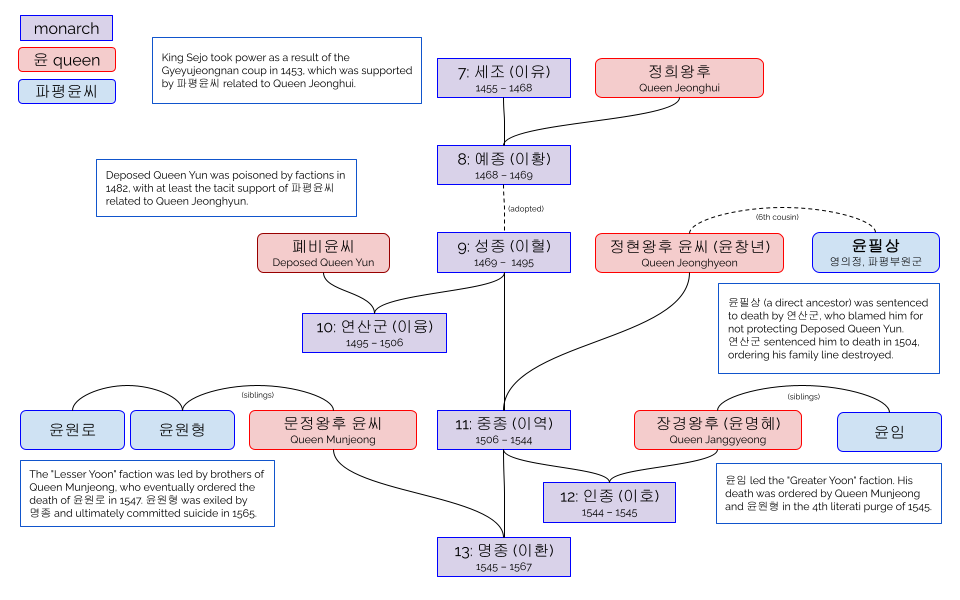
However, I am intimately familiar with my family history, which goes as far back in Korea as former President Yoon’s, all the way back to the same roots in Koryo history. So when I saw his life sentence, I thought about the death sentence imposed upon my direct ancestor Yoon Pilsang, who was the first Papyeong Yoon to hold the highest civilian position in Korean government, early in the second century of the Joseon dynasty, which followed Koryo.
In April of 1504, King Yeonsangun ordered Yoon Pilsang to be put to death by poison, the traditional method of execution for crimes against the king. But Pilsang was as bullheaded as any Papyeong Yoon, so when the executioner arrived, he took his own poison which he had prepared in advance, presumptuously telling the executioner, “I knew this was coming.” After a little while the poison wasn’t working fast enough, so Yoon Pilsang again disdained the king’s poison and instead made a noose with his own silk cloth and hung himself to death.
The king took great offense at Yoon’s presumptions, and ordered that his corpse be methodically dismembered and his head displayed in the marketplace. Yoon Pilsang had a great deal of property, and the king confiscated it all, as well as all the property of his four sons, who the king also had beaten and sent into exile. After a few months, the king decided mere exile wasn’t enough, and had three of the sons beheaded. He then ordered various nonlethal punishments for the six grandsons. The general goal here was to extinguish this troublesome line of the Papyeong Yoons.
And then the next year, still thinking these particular Yoons needed some more salt, King Yeonsangun had the bodies of Yoon Pilsang’s grandfather, uncle, and nephew dug up from their graves for posthumous dismemberment. Finally, he had Yoon Pilsang’s bones dug up and burned to ashes, then scattered into the winds over the sea, declaring that heaven could not allow this man’s ashes to give substance to trees that might take root.
You might be wondering at this point exactly what Yoon Pilsang did to deserve all this. Well, it’s complicated, but in short: When Yeongsangun was a small child, his father the king ordered his mother to be put to death by poison. Yoon Pilsang was the highest advisor to the king even then, and he did nothing to stop this, and was very likely involved in the palace intrigue that led to her death. Yeongsangun was raised by another of the king’s wives, believing she was his mother. After he became the king, he learned the truth of his parentage and the poisoning, and he took his revenge.
At this point, you might be developing some sympathy for the little prince, but Yeonsangun is known as the worst tyrant in Korean history. His revenge wasn’t limited to my ancestors, not at all. He beat several of his concubines and staff to death with his bare hands. He headbutted the Queen Mother, causing her death. Over two hundred court officials were executed, exiled, or dismissed, many of them having their properties confiscated and their wives sent to slavery. And even beyond and before and certainly after all of these events, his selfishness, perversions, and cruelty were well known throughout the kingdom.
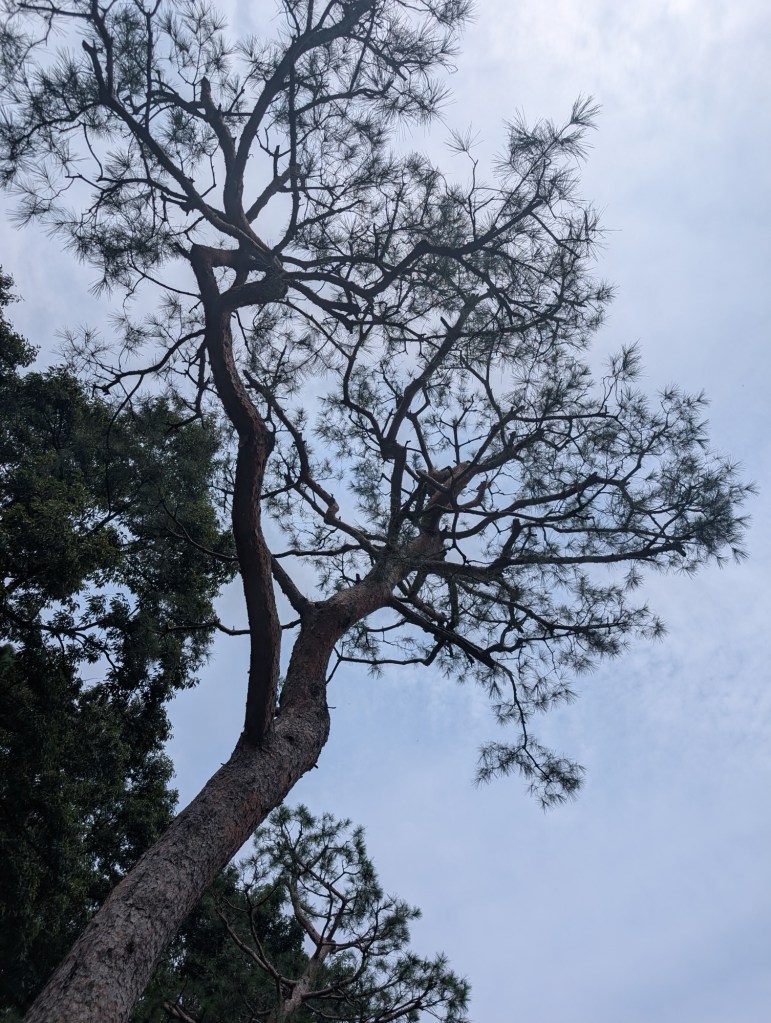
So only two years after Yoon Pilsang’s death, Yeongsangun was overthrown in yet another palace coup, and King Jungjong restored lands and titles to my family, including the burial grounds where, over five hundred years later, I scattered my father’s ashes under a strong and beautiful tree.
Is there a lesson in all this for my distant cousin Yoon Suk Yeol, who may contemplate questions for the rest of his life in prison? It’s not for me to say; I don’t know him, I don’t know Korean politics, I don’t live in Korea. But surely, he has contemplated the life and times of my great-times-eighteen grandfather.
Yoon Pilsang died believing that his family line would disappear into the sands of time, ground into dust by a vengeful and insane king. Half a millennium later, I survive in time to watch history rhyme, again and again and again. It can feel wonderful to be in a family that remembers all of its history. And perhaps at times it’s a horrifying weight to know that your family will remember your record for as long as history is recorded.
 ginsudo